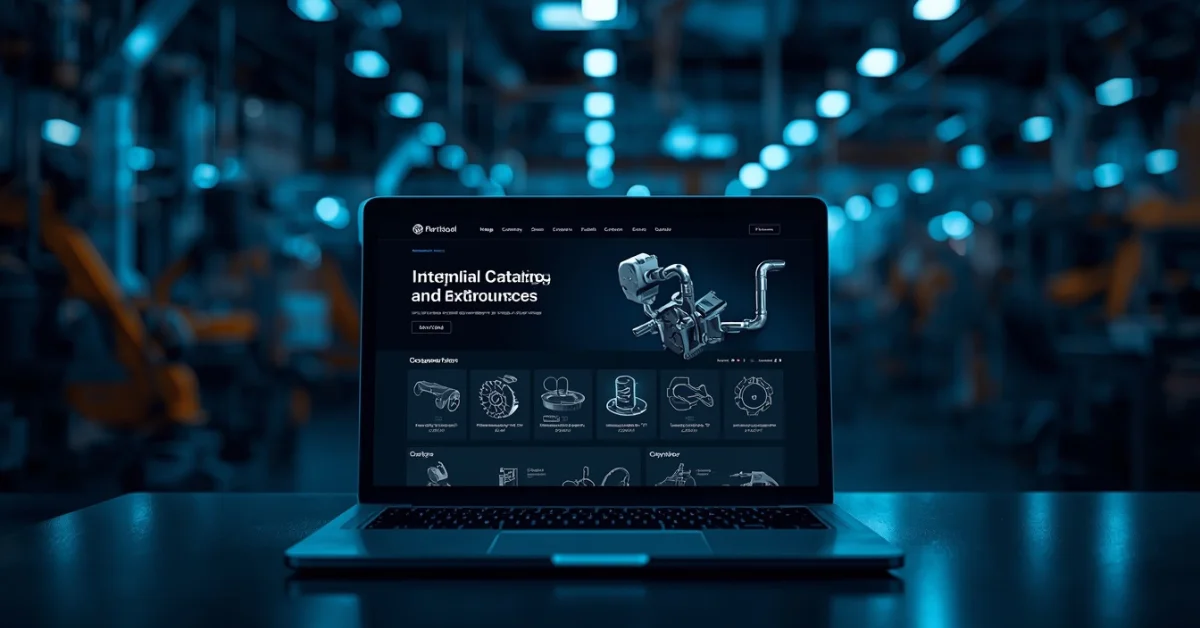
Manufacturing web development is not standard B2B web design with an industrial color palette. The technical requirements, content architecture, and buyer journey for a manufacturing company are different enough from a typical services business that generalist agencies consistently miss the mark — and manufacturers consistently end up with sites that look professional but fail to do what an industrial website needs to do.
The modern industrial buyer has changed the standard. Engineers, procurement managers, and technical decision-makers now begin their research online long before they contact a supplier. Forrester’s research found that most B2B buyers complete 57 to 70 percent of their purchasing research before ever engaging with a sales representative. For a manufacturer, this means the website is not a digital business card — it is a technical resource that needs to answer the questions a procurement engineer will ask before approving a vendor. If it cannot do that, the company is invisible during the most critical phase of the buying process.
This guide covers what manufacturing web development actually requires, why standard web development approaches fall short, the platform decisions that determine long-term cost and flexibility, what industrial sites need to include to function as real business tools, and realistic cost expectations.
Why Manufacturing Web Development Is Different
Three things separate manufacturing website requirements from standard B2B or e-commerce development.
First, product complexity. Most manufacturing companies sell products with dozens or hundreds of variations. A single pump line might include 50 SKUs across different sizes, materials, pressure ratings, and configurations. A fastener manufacturer might catalog thousands of part numbers. Standard e-commerce templates and generic product page structures are not built for this scale or for the way engineers search for industrial components — by specification, not by keyword. Faceted filtering that lets users narrow results by material, tolerance, certification, or application is a technical requirement, not a design preference.
Second, the sales cycle. Consumer e-commerce is built for impulse and convenience — the goal is to reduce friction to a single click. Industrial purchasing is the opposite. Capital equipment decisions involve multiple stakeholders across engineering, operations, procurement, and finance. The sales cycle is weeks or months, not minutes. A manufacturing website needs to support that process — providing the technical depth that an engineer needs, the compliance documentation that procurement requires, and the ROI framing that a CFO will ask about, all on the same site.
Third, technical documentation. Engineers need to evaluate whether a component fits their system before they contact a supplier. Providing downloadable CAD files, technical data sheets, installation guides, and compliance certifications is one of the highest-value things a manufacturing website can offer. A procurement engineer who can download a CAD file and drop your component into their design to verify fit is far more likely to specify your part in the bill of materials than one who has to contact sales just to get dimensional drawings.
What an Industrial Website Actually Needs
Product Catalog Architecture That Engineers Can Navigate
Navigation is where most manufacturing websites fail. Companies with hundreds of products across multiple categories need navigation systems that work for both browsing and direct search — and those are different user behaviors that require different solutions simultaneously.
Faceted filtering is the core requirement: users need to narrow results by specifications, materials, applications, certifications, and compliance standards without losing context of where they are in the catalog. Search needs autocomplete and tolerance for part number variations — an engineer searching for a specific SKU should find it even if they enter the number with slightly different formatting than your internal system uses. Breadcrumb navigation keeps users oriented in deep catalog structures. The architecture should support both the engineer who knows exactly what part number they want and the procurement manager who is evaluating product categories for the first time.
Technical Documentation Downloads
CAD files, technical data sheets, installation manuals, compliance certifications, and application guides are not supplementary content for industrial websites — they are primary conversion drivers. An engineer who downloads a CAD file and successfully integrates your component into their design has effectively pre-qualified your product without any sales involvement. Companies that provide this documentation online are specified earlier in the design process than companies that require a sales contact to release technical information.
The documentation should be organized at the product level, not buried in a generic downloads section. Engineers looking for specifications on a specific pump model should find the CAD file, data sheet, and installation guide directly from that product page, not from a separate resource library where they have to search again.
Quote Request Systems
Generic contact forms are insufficient for manufacturing websites. A quote request system needs to capture the information relevant to the specific product category — material requirements, quantity, tolerances, application environment, delivery timeline — while remaining short enough that engineers actually complete it. Forms that are too long get abandoned; forms that are too short generate leads that the sales team cannot qualify without follow-up calls.
Quote request prompts should appear throughout the site — on product pages, on documentation download pages, and within application guides — not only on a standalone contact page. A visitor who has spent time reviewing technical specifications is far more likely to request a quote in that moment than to navigate separately to a contact page later.
Certifications and Compliance Visibility
In industries where reliability and compliance are non-negotiable — aerospace, automotive, medical device, food processing, energy — certifications are a purchasing prerequisite, not a differentiator. ISO certifications, ITAR registration, AS9100, FDA compliance, ATEX ratings: these need to be visible and verifiable on the website, not buried in a footer link or available only on request.
Procurement teams running vendor qualification processes use website content as a first-pass filter before investing time in deeper evaluation. A manufacturing company whose certifications are not clearly visible on the website fails that first-pass filter regardless of whether the certifications themselves are current and in good standing.
Application-Specific Content
Many manufacturers produce components that serve different industries with different requirements — the same pump may be used in oil and gas applications and in food processing, but the relevant certifications, materials, and installation requirements are completely different. Application-specific landing pages that address the requirements of each industry vertical are more useful to the target buyer and more effective for search visibility than generic product pages that try to speak to every application at once.
A CNC machining company that creates dedicated pages for aerospace machining, medical device machining, and defense machining ranks for those specific high-intent searches and presents more relevant content to each buyer than a single generic machining capabilities page does.
Platform Decisions for Manufacturing Websites
The platform choice determines how well a manufacturing website performs, how easily it can be maintained, and what it will cost over time. For small and medium manufacturing businesses, the three realistic options in 2026 are WordPress with custom development, a headless CMS architecture, or an industry-specific platform.
WordPress — The Strongest Starting Point for Most Manufacturing SMEs
WordPress powers more than 40 percent of all websites and offers the strongest combination of capability, flexibility, and total cost of ownership for most manufacturing companies. The case for WordPress in a manufacturing context is specific rather than generic: you own the website and data completely, unlike SaaS platforms where you are renting; the plugin ecosystem covers most industrial website requirements including product catalog management, documentation libraries, and quote request systems; and the talent market for WordPress developers is deep enough that maintaining and expanding the site long-term does not require a proprietary specialist.
The engineering-first approach matters for manufacturing specifically. A manufacturing website built on WordPress should be developed with performance and architecture decisions made before the design is finalized — not designed first and then figured out how to build. Manufacturing product catalogs with hundreds of SKUs and large documentation libraries have performance requirements that need to be addressed in the database structure and caching layer, not remediated after launch.
Headless CMS — For Higher-Traffic and More Complex Requirements
Headless CMS architecture decouples the content management backend from the frontend presentation layer. Content is managed in a system like Contentful, Sanity, or Prismic, and delivered via API to a frontend built in React, Next.js, or another modern framework. The result is faster page loads, more flexible frontend design, and easier integration with external systems like ERP, PLM, and inventory management.
For manufacturers with high traffic volumes, complex integration requirements, or multiple digital touchpoints that need to share product data consistently, headless architecture solves real problems. For a smaller manufacturer whose primary need is a functional product catalog and quote request system, the development cost premium of headless architecture is difficult to justify against WordPress with proper engineering. The architecture should match the business complexity, not the agency’s preferred technology stack.
ERP and System Integration
For manufacturers with ERP systems managing inventory, pricing, and order management, website integration is a real development consideration rather than a future-phase nice-to-have. A product catalog that shows inventory availability and current pricing from the ERP in real time is more useful to a procurement buyer than a static catalog that requires a sales call to get current pricing. An order status portal that connects to the ERP lets customers track their orders without contacting customer service.
The integration complexity varies significantly by ERP system and website platform. SAP, Oracle, Microsoft Dynamics, and industry-specific systems like Epicor and Infor all have different API structures and integration patterns. Scoping ERP integration requirements early in the website development process prevents the most common problem in manufacturing website projects: launching a site and then discovering that the integration approach that was assumed during design is not technically feasible with the actual ERP API.
Manufacturing Website Development Costs
Manufacturing website development costs more than a standard B2B site because of the additional requirements — product catalog architecture, technical documentation systems, ERP integration, and the longer development time required to build a site that actually functions as a business tool rather than a digital brochure.
A professionally developed manufacturing website typically costs between $15,000 and $80,000 for the initial build, with significant variation based on catalog size, integration requirements, and custom functionality. A basic marketing site with a product overview and contact form for a manufacturer with a limited product range sits at the low end. A comprehensive product catalog with faceted filtering, CAD file downloads, quote request workflows, and ERP integration sits at the high end.
Ongoing maintenance and content management is a separate cost that many manufacturers underestimate in the initial budgeting process. A manufacturing website is not a one-time project — it requires regular content updates as products change, ongoing SEO work to maintain search visibility, security updates, and periodic technical maintenance. Budgeting $500 to $2,000 per month for ongoing management is realistic for a site of meaningful complexity, with simpler sites at the lower end of that range.
The comparison point that makes these costs make sense is the alternative: a manufacturer that is invisible during the digital research phase of the procurement process loses opportunities that never appear in the pipeline. The industrial buyer who cannot find technical documentation on your website specifies a competitor whose documentation was available. The cost of a poorly built or absent digital presence in manufacturing is not a website budget line item — it is lost revenue that does not show up anywhere attributable.
SEO for Manufacturing Websites
Manufacturing SEO operates differently from consumer or general B2B SEO because the search intent is technical and specific rather than broad. Engineers and procurement professionals search for part numbers, specifications, certifications, and application requirements — not generic category terms. A manufacturer that ranks for “stainless steel check valves ANSI 150” captures a buyer who knows exactly what they need. A manufacturer that only ranks for “check valves” is competing in a far broader and less convertible search category.
Each core capability deserves its own dedicated page optimized for the specific terms engineers use to find it. A contract machining company that creates separate pages for CNC turning, CNC milling, Swiss screw machining, and EDM machining ranks for the specific searches that a buyer in the design phase uses — and each page can address the specific certifications, tolerances, and material capabilities relevant to that process rather than trying to address all of them on one generic capabilities page.
For a broader look at how cloud infrastructure supports industrial website hosting and performance requirements, see our guide on cloud computing for small business. And if you are evaluating AI tools that manufacturing marketing teams are adding to their digital workflows in 2026, our article on AI productivity tools updates 2026 covers the automation layer that is changing how industrial marketing teams operate.
Frequently Asked Questions
What is manufacturing web development?
Manufacturing web development refers to the design and development of websites specifically for manufacturing companies, with requirements that differ materially from standard B2B or e-commerce sites. Industrial websites need to organize complex product catalogs with hundreds of SKUs and variations, provide downloadable technical documentation including CAD files and data sheets, support long B2B sales cycles involving multiple stakeholders, and often integrate with ERP systems for real-time inventory and pricing data. The technical and content architecture requirements are specific enough that generalist agencies without industrial experience frequently miss the functional requirements that make a manufacturing website effective as a business development tool.
How much does a manufacturing website cost to build?
A professionally developed manufacturing website typically costs between $15,000 and $80,000 for the initial build, depending on catalog size, integration requirements, and custom functionality. A basic marketing site for a manufacturer with a limited product range sits at the lower end. A comprehensive product catalog with faceted filtering, CAD file downloads, quote request workflows, and ERP integration sits at the higher end. Ongoing maintenance and content management typically adds $500 to $2,000 per month for sites of meaningful complexity.
What platform should a manufacturing company use for its website?
WordPress with custom engineering is the strongest starting point for most small and medium manufacturing businesses — it offers the capability, flexibility, and long-term cost of ownership that industrial requirements demand, with a deep developer talent market that makes future maintenance straightforward. For manufacturers with high traffic volumes, complex ERP integration requirements, or multiple digital touchpoints sharing product data, a headless CMS architecture delivers better performance and integration flexibility at a higher initial development cost. The platform choice should match the business complexity, not the agency’s preferred technology stack.
What should a manufacturing website include?
A manufacturing website that functions as a genuine business development tool needs a product catalog with faceted filtering by specification, material, application, and certification; downloadable technical documentation including CAD files, data sheets, installation guides, and compliance certificates at the product level; quote request systems that capture relevant technical requirements within each product category; visible certification and compliance credentials; application-specific landing pages for each industry vertical the company serves; and clear contact pathways that connect product research to sales engagement. Generic contact forms, single-page product overviews, and PDF catalogs that require a sales contact to download are the most common gaps that reduce the effectiveness of industrial websites.
How important is SEO for manufacturing websites?
SEO is critical for manufacturing websites because the industrial buyer research process begins online in the majority of B2B purchasing decisions. Engineers and procurement managers search for specific technical terms — part numbers, specifications, certifications, process capabilities — before contacting a supplier. A manufacturing company that is not visible for those searches is absent from the evaluation process entirely. The most effective manufacturing SEO creates dedicated pages for each core capability and product category, optimized for the specific terminology that technical buyers use rather than generic industry terms.
Do manufacturing websites need ERP integration?
Not all manufacturing websites require ERP integration, but it becomes increasingly valuable as website complexity and traffic grow. The most useful integrations display real-time inventory availability and current pricing on product pages, provide order status tracking without requiring customer service contact, and synchronize product data between the ERP and website catalog to eliminate manual update processes. The decision depends on whether real-time data from the ERP would materially improve the buyer experience and reduce internal administrative overhead. For manufacturers with complex pricing rules, large active customer bases, or high order inquiry volume, ERP integration typically delivers clear ROI. For smaller manufacturers with simpler product lines and lower inquiry volume, the integration cost may not be justified by the benefit.
How long does it take to build a manufacturing website?
A professionally built manufacturing website typically takes 8 to 16 weeks from project kickoff to launch, with significant variation based on catalog size, content preparation, integration complexity, and the client’s review and approval process. The content preparation phase — gathering product data, technical documentation, application descriptions, and compliance certifications — is frequently the longest phase of a manufacturing website project and the one most commonly underestimated in project planning. Manufacturers that arrive at a web development engagement with organized product data, existing technical documentation, and clear content requirements complete projects significantly faster than those who discover during the project that their product data is incomplete or inconsistent.